Categories
Home
Contact
Books


Please visit

www.ayurnagar.com
www.biotechayur.com
www.nutritionbest.com
www.bestnutrition.com
www.diabetea.com
www.gugul.com
www.gymnema.com
www.oriyaentrepreneur.com
www.AIMSHT.com


Psyllium

  • Highest source of dietary fiber
  • Colon cleanser
  • Removes toxins from the intestines
  • A natural bulk laxative for humans and animals
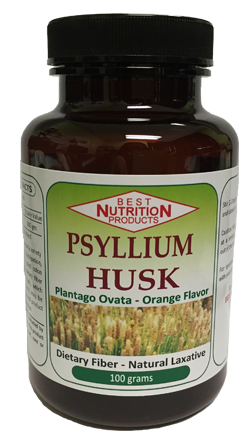
Psyllium Husk 100 gm Orange Flavor
Price : $ 5.50
 
POSTAGE WILL BE CALCULATED
for DOMESTIC AND INTERNATIONAL
 
Add To Cart


Psyllium -- Benefits

Dietary fiber, formerly unrecognized for its health benefits, has received much attention as of late. It is widely accepted as playing a significant role in reducing total blood cholesterol, thereby decreasing the risk of coronary heart disease, and in helping to alleviate numerous bowel disorders.

Dietary fiber can be divided into two basic categories, soluble and insoluble. Soluble fiber dissolves in water, and insoluble fiber, as the term describes, does not. Both soluble and insoluble fiber provide bulk in the large intestine and encourage bowel regularity. However, there are, it seems, some quite important additional benefits to be derived from the effects of soluble fiber on the digestive system and on cholesterol.

Psyllium is a natural, water-soluble, gel-reducing fiber which is extracted from the husks of blond psyllium seeds (plantago ovata). Psyllium is a member of a class of soluble fibers referred to as mucilages. Mucilages, which retain water, tend to be rather thick and jelly-like in nature. Also in the mucilage family is guar gum, an ingredient in most beans. It is used as a stabilizing and thickening agent in many salad dressings, soups, lotions, and creams. Another commonly used dietary fiber is wheat bran, which is, for the most part, insoluble and classified as a cellulose fiber. Also widely used are oat bran, a hemicellulose fiber, and apple pectin, both of which are water soluble.

The water-soluble fibers such as psyllium, oat bran, apple pectin, and guar gum have demonstrated an ability to lower blood cholesterol levels. Theories concerning how this is accomplished include the ability of water-soluble fiber to increase the secretion of cholesterol through the bowel, to limit cholesterol levels, and to bind to and absorb bile acids in the intestine. The water insoluble fibers, wheat bran, for example, have not exhibited the same success in lowering cholesterol as have water-soluble fibers.

PSYLLIUM -- THERAPEUTIC USES

According to the Journal of the American Medical Association (June 1989), coronary heart disease (CHD) is the number one cause of death in the United States. "Elevation of the serum cholesterol level, or, more specifically, the low-density lipoprotein (LDL) cholesterol level, is widely accepted as a major risk for development of ischemic heart disease." LDL refers to the "bad" cholesterol and is known to cause heart disease. In contrast, HDL (high-density lipoprotein) refers to the "good" cholesterol and is associated with heart health.

Psyllium's effect on serum cholesterol levels has been tested in numerous studies and has proven to be quite substantial in lowering cholesterol. Of particular interest is a double-blind, placebo-controlled study cited in the Archives of Internal Medicine (February 1988). In this study, 26 men with mild to moderate hypercholesterolemia (high cholesterol) were given either 3.4 grams of psyllium or a placebo at meals, three times daily for eight weeks. All of the men continued their usual diets, which consisted of less than 300 mgs. of cholesterol per day, and of approximately 20 percent protein, 40 percent carbohydrate, and 40 percent fat. "Eight weeks of treatment with psyllium reduced serum total cholesterol levels by 14.8 percent, low density lipoprotein (LDL) cholesterol by 20.2 percent, and the ratio of lDL cholesterol to high-density lipoprotein cholesterol by 14.8 percent relative to baseline values."

It is also noteworthy that in this study the reductions in total cholesterol and LDL cholesterol increased with time. No negative side effects were reported and neither body weight, blood pressure, nor blood levels of HDL cholesterol, triglycerides, glucose, iron, or zinc were affected. The authors concluded, "Results of this study show that psyllium is an effective and well tolerated therapy for mild to moderate hypercholesterolemia." They also noted, "From a safety viewpoint, psyllium is well suited for long-term use in lowering blood cholesterol."

A study published in Food Engineering (June 1990) found psyllium to be superior to oat bran in lowering total cholesterol. Psyllium contains 60 to 70 percent soluble fiber which is "eight times that of oat bran."

Today, in addition to reducing fat consumption and exercising, many people are using a dietary fiber such as psyllium to control their cholesterol levels. Psyllium affords many benefits and very few, if any, side effects. Cholesterol-lowering drugs, in contrast, can have numerous side effects, such as liver complications and constipation. These drugs also can be quite costly, in comparison to the very reasonably priced fiber supplements such as psyllium.

There are, however, stubborn cases of elevated cholesterol which do not respond to fiber, dietary changes, and exercise alone. A word of caution: if you are taking a drug to control your cholesterol level, you must consult with your physician before attempting to lower the dosage or discontinue its use.

Psyllium is popularly used to combat a variety of digestive complaints such as constipation, diarrhea, diverticular disease and colitis. In addition, it is being utilized as part of many colon "cleansing" programs and even in the prevention of colon cancer. During a lifetime, one consumes approximately 90,000 pounds of food and 55,000 quarts of liquid. For a majority of Americans, a large percentage of these totals consists of hamburgers, sodas, candy, cakes, cookies, pastries, potato chips, pizza and ice cream. It is no wonder that almost one in every four of us suffers some type of digestive illness.

A diet low in fiber and rich in meats, fats and sugar slows down intestinal transit time (the time between eating food until it is passed in a bowel movement). Intestinal transit time can range from between two days to nearly one week with this type of diet. People whose diets are high in fiber have transit times closer to one day, which is a great deal more healthful.

A slow transit time allows for more of an opportunity for bacterial purification and exposure to a host of carcinogenic substances within the colon. In a study which appeared in The Lancet (September 1982), it was found that rates of death from cancer and all other causes were approximately three times higher for men in the lowest category of dietary fiber intake than for those in the highest category.

The positive effects that dietary fiber has on intestinal transit time are consequences of its stool-bulking and stool-softening properties. Psyllium, for instance, swells and forms a viscous gel when exposed to water. A stool which is larger, softer, and bulkier moves through the intestine more easily and quickly and requires less exertion to be expelled. Hence, less force is applied to the intestinal wall. This prevents the creation of pockets in the intestine, which can result in the development of diverticular disease, and also lowers the incidence of hemorrhoids and varicose veins.

The bulking effect of psyllium also works to rid the colon of toxic substances and heavy metals as it acts almost as a sponge to soak them off the walls of the intestine. This spongy action has a dual advantage as it can decrease hunger when taken with meals.

Psyllium has proven to be useful in some cases of diarrhea. In these instances it acts to slow down a too rapid transit time. Psyllium, in fact, seems to stabilize bowel movements and is often used in cases of alternating constipation and diarrhea. Psyllium also encourages the growth of healthful, "friendly" intestinal bacteria such as Lactobacillus acidophilus and bifido bacteria which are helpful in regulating bowel movements.

Since psyllium acts primarily by absorbing water and adding more bulk to the stool, it encourages the normal peristaltic (contracting) action of the bowel. Stimulant laxatives, on the other hand, contain chemicals which cause the intestine to increase the secretion of water. They can often create strong contractions of the colon and, if used in excess, can lead to a loss of normal bowel peristalsis and tone. A dependence on them may also develop, as can a tolerance to them in which more laxatives are needed to produce even the slightest bowel movement. Diarrhea, stomach discomfort, intestinal irritation, gas, bloating and even weight loss are additional side effects of stimulant laxatives.

Ironically, when dietary fiber speeds up the transit of food through the intestines, it slows down the stomach's action of emptying food into the small intestine, blood glucose increases more slowly as well. Dietary fiber can also stimulate pancreatic enzyme secretion. These two attributes make dietary fiber a beneficial addition in the management of diabetes.

Initially, when one adds psyllium to the diet, there may be a slight uncomfortable feeling of fullness as the psyllium seems to expand in the intestine. This usually lasts only until a bowel movement is passed. There are several popular psyllium-containing bulk laxatives on the market today. In some of these, other bulk-forming laxatives such as flaxseed, marshmallow, Irish moss, and slippery elm are added to enhance the effect. Check labels, as sugar and a host of chemicals may also be added to psyllium-containing laxatives.

There are people who have a low tolerance for fiber in their diets. In such cases, psyllium, and dietary fiber in general, can cause intestinal irritability, e.g., gas, bloating, and pain. There have also been cases of people having allergic reactions to psyllium, although these have been extremely rare.

Constipation and other bowel disorders can be a sign of a possible serious organ dysfunction. If you do not respond to the inclusion of dietary fiber in your diet, an ample amount of water intake and moderate exercise, you may need medical attention, as a variety of diseases can cause irregularity of the bowels.

The average recommended dosage for psyllium is about one or two tablespoons with meals once or twice daily. However, I suggest starting with a lower dose and gradually working up to this level. One or two glasses of water should be taken with each dose. Whereas stimulant laxatives tend to create an immediate and sometimes violent response, the positive effects of psyllium on constipation are usually more gradual. It can take up to a few weeks for a change to be noticed. However, when the change is felt, it is a result of an actual toning of the bowels rather than simply an irritation and purge of them.

It is clear that supplementing your diet with a water-soluble fiber such as psyllium can provide many benefits. Whether you suffer from occasional bouts of constipation or diarrhea, diabetes, food cravings, high cholesterol or simply want to "clean" your colon, psyllium may be just what you are missing.

Please Visit:


AIMSHT

Ashwagandha

Ayurbiotec

Ayurnagar

Ayurvedicphysicians

Ayurvedic supplements

Best Nutrition

Biotechayur

Biofertilizer

Bittermelons

Bromelain

Chavanprash

Cinnamon

Diabetea

Fenugreek

First Health Foods

Gugul

Gymnema

Kamasutra

Luteinin

Lycopenin

Malunggay

Psyllium

Related Book

Safed Musli

Shilajeeta


Freelance Web Designer
